Amazon Brand Story Video: Maximize Impact and Sales
Amazon Brand Story video is one of the most underutilized conversion assets available to Brand Registry sellers — and one of the few listing elements where most competitors are leaving a clearly visible gap. While brands fight aggressively over main images and bullet points, the Brand Story module sits largely ignored, filled with generic copy and static lifestyle images that do almost nothing for conversion.
This article explains exactly how to maximize Amazon Brand Story video impact — what the module actually does for buyers, how to structure the content for conversion, and how to test it systematically rather than guessing.
What the Amazon Brand Story Video Module Actually Does
Before discussing strategy, it's worth being specific about what the Brand Story module is designed to do — because most sellers misunderstand its function and, consequently, misuse it.
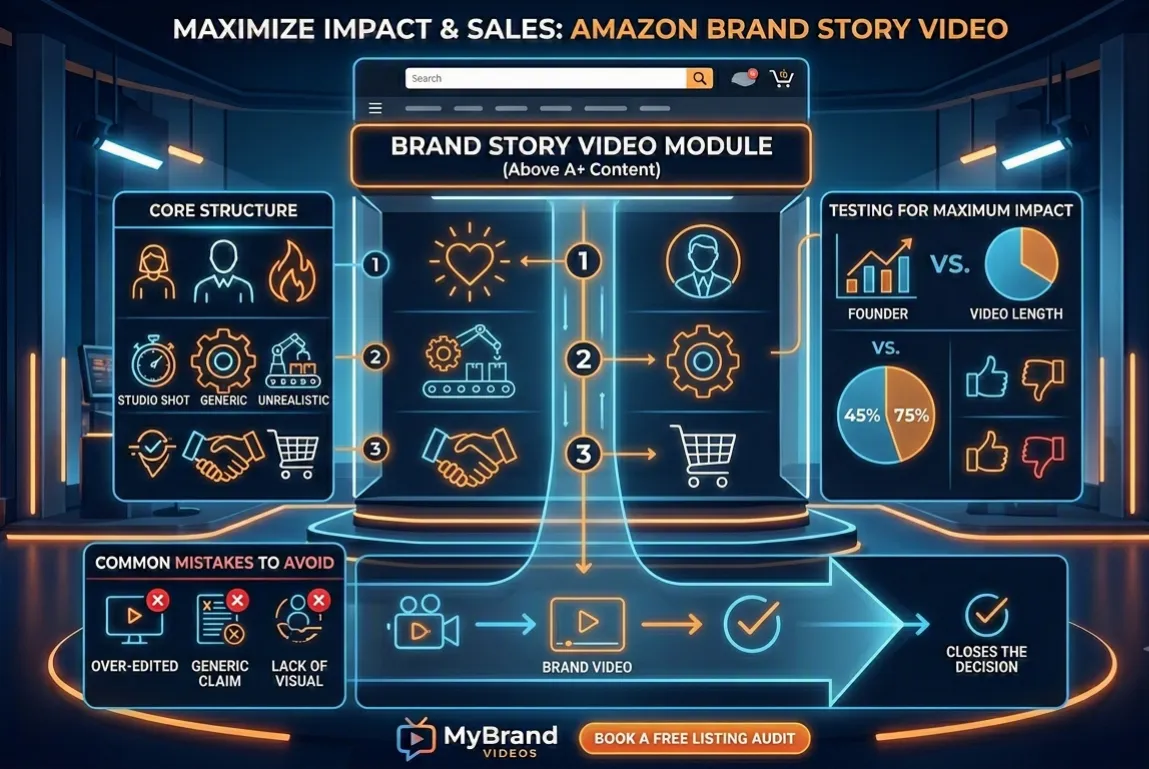
The Brand Story section appears below the bullet points and above A+ Content on a listing page. Buyers who reach it have already read your title, viewed your images, and scanned your features. They're not still deciding whether to understand the product. Instead, they're deciding whether to trust the brand behind it.
This distinction matters enormously for how you approach the module. Brand Story isn't a second opportunity to explain product features — it's your first real opportunity to establish the brand as a credible, aligned partner for the buyer's specific needs. Furthermore, it's the place where the brand's personality, values, and story can do the persuasive work that product copy alone cannot.
When implemented correctly, the Amazon Brand Story video transforms brand perception before the buyer reaches the A+ Content section — which means everything below it converts from a position of stronger trust.
Why Video Outperforms Static Brand Story Modules
A static Brand Story module — images and text panels — communicates competence at best. A well-produced Brand Story video, however, communicates something qualitatively different: personality, credibility, and emotional resonance.
Buyers who watch a brand video, even briefly, develop a stronger sense of who the brand is than buyers who read the same information in text form. This is, therefore, why Brand Story video consistently outperforms static modules for considered purchases where trust is a primary conversion lever.
The Core Structure of a High-Converting Amazon Brand Story Video
Amazon Brand Story video that actually moves conversion follows a consistent narrative structure regardless of product category.
Opening: Establish the "why" — not the "what." Most brand videos lead with product features or company history. However, the strongest Brand Story openings lead with a reason the brand exists that a buyer can immediately connect with emotionally. "We started this brand because we couldn't find a pet product that treated animals like family" lands differently than "We are a premium pet products company founded in 2018."
Middle: Show, don't tell. The middle third of the video should demonstrate the brand's values through visuals rather than claims. If the brand stands for sustainability, show the sourcing process. If the brand stands for quality, show the production or testing process. Buyers are deeply skeptical of brand claims — but they respond to visual evidence.
Close: Create continuity with the buying decision. The close of the Brand Story video should connect the brand's narrative directly to the buyer's decision. Specifically, it should leave the viewer feeling that choosing this brand is aligned with who they are or who they want to be — not just a functional purchase.
How to Test Your Amazon Brand Story Video for Maximum Impact
Most sellers produce one Brand Story video and never revisit it. This approach, however, leaves significant conversion gains untested. Amazon's Manage Your Experiments tool allows Brand Registry sellers to A/B test Brand Story module content — and the results frequently reveal meaningful differences between seemingly similar approaches.
Variables Worth Testing in Brand Story Video
Narrative angle. Test a founder-story opening against a mission-statement opening against a customer-community opening. The winning angle reveals what your specific audience responds to most strongly — and that insight carries over into every other piece of brand creative you produce.
Video length within the module. Brand Story video has more length flexibility than main listing video. Testing a 45-second version against a 75-second version tells you whether your buyers want depth or efficiency in this module specifically.
Opening frame and thumbnail. The still image buyers see before pressing play determines whether they engage at all. Testing a founder face against a lifestyle product shot against a customer testimonial opening can reveal substantial differences in play rate — which affects whether the content ever gets a chance to convert.
Emotional tone. Testing a warm, personal tone against a more aspirational, premium tone tells you where your audience sits on the trust-building spectrum. Some buyers want authenticity and relatability. Others want to associate with a brand that feels exclusive and elevated.
Common Mistakes That Undermine Amazon Brand Story Video Impact
Several patterns consistently reduce the effectiveness of Brand Story content, even when production quality is high.
Treating it as a product video. The single most common mistake is using the Brand Story module to re-explain product features that are already covered in the main listing video and A+ Content. Buyers who reach Brand Story already have product information. What they need is brand context — and repeating product information wastes that opportunity.
Generic storytelling. A brand story that could apply to any company in the same category does no persuasive work. "We are passionate about quality and dedicated to our customers" communicates nothing specific. Every element of the story should be something only your brand can claim.
No visual connection to the buyer's life. The most powerful Brand Story content shows the product and brand in the context of the buyer's actual life — not in a studio, not in a generic lifestyle set, but in environments and situations the target buyer immediately recognizes as their own.
Misaligning tone with price point. A premium product with a casual, low-production Brand Story video creates a credibility mismatch that erodes buyer confidence. Conversely, a friendly, accessible product with an overly corporate Brand Story creates a disconnect that makes buyers feel the brand doesn't understand them.
How Amazon Brand Story Video Fits Your Full Creative Strategy
Amazon Brand Story video doesn't operate in isolation — it functions as part of a conversion stack that works together across the full listing experience.
The buyer journey through a well-optimized listing typically flows as follows. Main images build initial visual interest. Bullet points communicate key features and primary benefits. The main listing video demonstrates function and addresses buyer objections. Brand Story video then establishes the brand context that elevates perceived value and trust. Finally, A+ Content provides the deeper detail and lifestyle reinforcement that closes the decision for buyers who are still considering.
When Brand Story video is missing or generic, that middle section of the conversion stack is broken. Consequently, buyers arrive at A+ Content without the brand trust that makes the remaining content land with full persuasive weight.
Integrating Brand Story With Your A/B Testing Cycle
Additionally, the insights generated from Brand Story testing can inform other listing elements. If a founder-story angle in Brand Story significantly outperforms a mission-statement angle, that same insight likely applies to how you open your main listing video, how you write your brand-focused bullet points, and how you approach social media content about the brand.
Testing in Brand Story, therefore, isn't just optimization for a single module — it's intelligence that improves your entire creative output.
A Practical Starting Point for Your Amazon Brand Story Video
If you haven't yet produced a Brand Story video, or if your current one is static content with no video, here is a practical structure to work from.
First, identify the single most compelling reason your brand exists — not what the product does, but why the brand was created. Second, identify the one visual that most powerfully represents your brand's relationship with its customers. Third, determine the one thing you want a buyer to feel at the end of the Brand Story module before they continue scrolling to A+ Content.
Build the video around those three elements — a clear reason, a strong visual, and a defined emotional outcome. Keep it between 45 and 75 seconds for the initial version. Then test it.
Ready to Build an Amazon Brand Story Video That Converts?
At My Brand Videos, we produce Amazon Brand Story video as part of our full listing creative packages — scripted around your brand's specific narrative and tested against your buyers' actual response.
If your Brand Story module is currently static or missing entirely, you're leaving a conversion asset unused that your competitors haven't maximized either.
We'll review your current Brand Story module alongside your main listing video and show you specifically what a well-structured Brand Story video would do for your conversion stack.
Related articles:
