Amazon Video for Multi-Channel Selling: Beyond the Listing
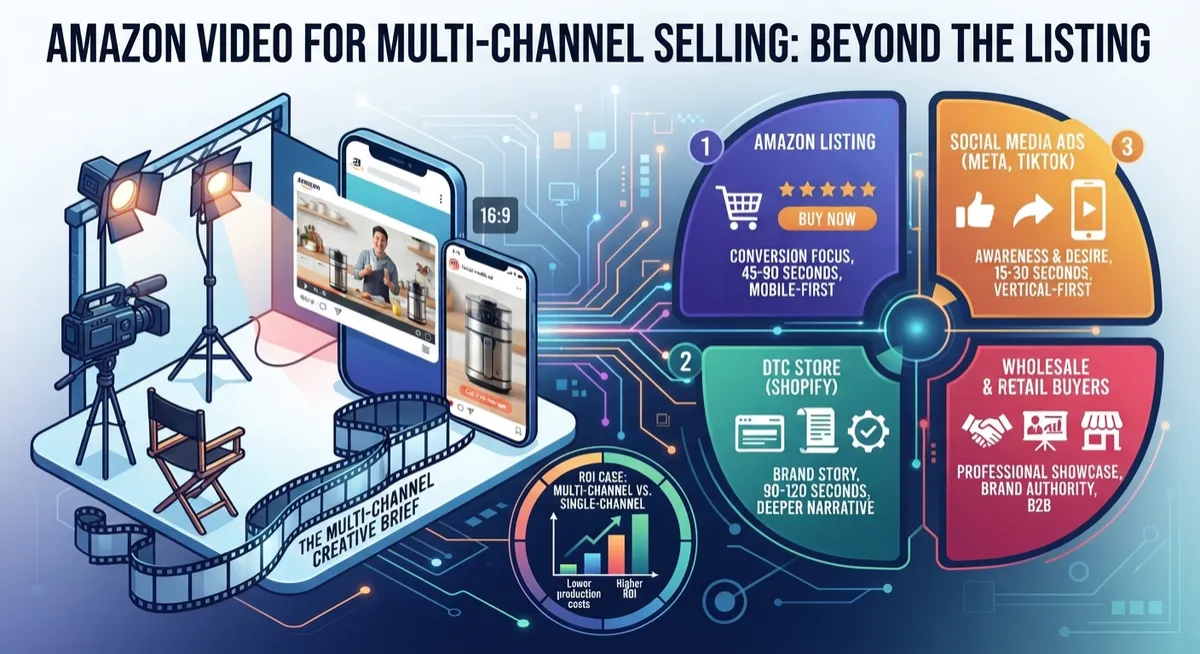
Amazon multi-channel video strategy is the practice of treating creative production as a brand asset that works across every channel where the brand operates — not as a listing-specific expense that begins and ends with Amazon's specific requirements. Most sellers who produce professional video for Amazon do so with only the listing in mind, which means the same production investment that could serve their DTC store, social advertising, and wholesale catalog is narrowly optimized for one channel and underutilized across all others.
This guide covers how to build Amazon video production around a multi-channel creative brief, what adaptations different channels require, and how to structure production to maximize the return on creative investment across every channel simultaneously.
Why Multi-Channel Video Production Is a Different Brief
The difference between Amazon-specific video and multi-channel video isn't primarily about production quality — it's about what's captured during production and how the raw footage is organized for subsequent channel-specific adaptation.
Amazon-specific production optimizes for a specific duration (45 to 90 seconds for listing video), specific technical requirements (Amazon's format and aspect ratio specifications), and specific conversion behaviors (mobile-first, autoplay without sound, direct purchase intent). These constraints produce creative decisions that may not translate directly to other channels without adaptation.
Multi-channel production adds a layer to the brief: capturing additional footage and formats that enable channel-specific adaptation without requiring additional production days. This additional capture might include longer-form interview or testimonial footage for DTC video, vertical format footage for social media, lifestyle footage without product branding that works in broader brand content, and clean product showcase footage suitable for wholesale catalog or retail buyer presentations.
The additional production cost of capturing multi-channel footage is typically 15 to 25 percent above single-channel production cost — far less than the cost of separate production sessions for each channel.
Adapting Amazon Video Content for Different Channels
Each channel has specific requirements and buyer behaviors that affect which elements of Amazon-produced content translate directly and which require adaptation.
DTC (Shopify, brand website). Video on DTC product pages serves buyers who are already engaged with the brand to a greater degree than Amazon buyers — they've chosen to navigate to your website rather than discovering you through search results. Consequently, slightly longer content (90 to 120 seconds) that provides more depth about the brand story and product narrative tends to convert better here than the tighter, objection-focused structure that Amazon listing video optimizes for. DTC video also doesn't compete for attention in a search results feed, which removes the aggressive hook requirement that Amazon listing video structure demands.
Social media advertising (Meta, TikTok, YouTube). Social video for paid advertising requires the most significant adaptation from Amazon listing video format. The vertical aspect ratio that dominates Meta and TikTok advertising requires specific vertical footage capture, not horizontal reframing. Social video also operates in an even lower-intent context than Amazon — buyers encountering a social ad have no expressed intent to purchase, which requires more aggressive problem-recognition and desire-creation content than Amazon listing video typically delivers.
Organic social content. Organic social video — Reels, TikToks, Shorts — follows different algorithm and engagement patterns than paid advertising. Short (15 to 30 second) educational or entertaining content typically outperforms promotional content in organic social distribution. The cleanest overlap between Amazon video production and organic social content is in UGC-style formats that capture authentic product use moments that feel native to social feeds.
Wholesale and retail buyer presentations. For brands selling through wholesale or pursuing retail placement, video that focuses on brand story, production quality, and retail positioning — rather than conversion-focused product demonstration — serves the wholesale buyer audience who is evaluating whether to carry the brand in their stores. This content can often be produced from the brand storytelling footage captured in Brand Story video production.
Building the Multi-Channel Production Brief
The multi-channel production brief adds four elements to a standard Amazon listing video brief.
Channel inventory. Define every channel where video content will be used: Amazon listing, Amazon SBV, DTC product page, Meta paid advertising, TikTok organic, wholesale presentations. Each channel identified at the brief stage enables production capture decisions that serve it.
Format requirements by channel. Document the aspect ratio, duration, and technical requirements for each channel's primary use case. Horizontal 16:9 for Amazon and DTC, vertical 9:16 for Meta and TikTok, square 1:1 as a flexible intermediate format. Plan specific capture for each format rather than reframing horizontal footage for vertical contexts.
Additional footage requirements. Beyond the core listing video content, specify what additional footage is needed for channel adaptation: longer testimonial takes for DTC, clean product close-ups for wholesale, lifestyle footage without branding for organic social, B-roll footage that provides social media assets without additional production.
Brand consistency anchor. Define the visual elements that must remain consistent across all channel adaptations — color treatment, music style, persona representation, brand voice — so channel-specific adaptations don't fragment the visual identity that brand equity depends on.
How Our Multi-Channel Clients Structure Production
The brands that maximize their creative investment across multiple channels typically structure production in one of two ways.
Full multi-channel production begins with a brief that encompasses every channel simultaneously, captures footage for all formats in one or two production days, and delivers edited assets for each channel on a coordinated timeline. This approach is most cost-efficient for brands launching new products across multiple channels simultaneously.
Modular production begins with Amazon-primary production and adds a half-day extension specifically for multi-channel content capture — vertical footage, extended interviews, lifestyle b-roll. This approach is more appropriate for established Amazon brands adding DTC or social channels and wanting to extend their existing creative approach rather than rebuild it.
The ROI Case for Multi-Channel Video Investment
The return calculation for multi-channel video production is straightforwardly favorable when compared against the alternative: producing separate content for each channel independently.
A full Amazon listing production at $2,500 extended with a 25 percent multi-channel capture premium costs $3,125. Separate productions optimized for Amazon ($2,500) + DTC ($1,800) + social advertising ($1,500) cost $5,800 for the same brand coverage with less visual consistency and brand coherence across channels.
The multi-channel approach delivers better creative at lower total cost — because production overhead (crew, location, talent, lighting) is shared rather than duplicated.
Ready to Build a Multi-Channel Video Strategy?
At MyBrand Videos, we produce multi-channel creative for Amazon sellers who operate across Amazon, DTC, and social — including brands like the outdoor entertaining brand in New Jersey that needed video not just for Amazon listing but for their growing multi-channel presence across online and wholesale buyers.
Related articles:
