Professional Amazon Video: Why Sellers Need It Now
Professional Amazon video has moved from a competitive advantage to a baseline expectation in nearly every category with meaningful sales volume. Sellers who delayed this investment for years are now competing against listings where video isn't just present — it's been tested, refined, and optimized through multiple iterations.
This article lays out, without hype, exactly why professional Amazon video matters at this stage of the platform's evolution, what the data shows about its impact, and how to think about the investment relative to your current revenue.
The Shift That Made Professional Amazon Video Necessary
Five years ago, having any video on an Amazon listing was a differentiator. Today, the differentiator has shifted entirely to production quality and strategic execution, because video itself has become common across competitive categories.
This shift happened gradually, then suddenly. As more sellers adopted video, buyer expectations adjusted alongside it. A listing without video now reads as outdated or under-resourced to buyers who have grown accustomed to seeing video on comparable products. Consequently, the absence of video has become a negative signal in many categories, not simply a missed opportunity.
This is the core argument for professional Amazon video at this stage: it's no longer about gaining an edge over competitors who have none. It's about not falling behind competitors who already have well-produced content.
Why DIY Video No Longer Closes the Gap
Some sellers respond to this shift by producing video themselves — a smartphone, natural light, and basic editing software. For very early-stage brands with minimal budget, this can serve as a starting point. However, for any brand doing six figures or more in annual revenue, DIY video typically signals exactly the wrong thing to buyers evaluating a purchase: that the brand hasn't invested seriously in its own product presentation.
What the Data Shows About Professional Amazon Video Impact
The case for professional Amazon video isn't built on opinion — it's built on measurable, repeatable patterns across categories and price points.
Conversion rate improvement. Listings adding their first professional video typically see conversion rate improvements between 15 and 30 percent. Listings replacing low-quality or DIY video with professional production see improvements between 8 and 18 percent. These aren't isolated results — they're consistent patterns across the categories where we've tracked client feedback over multiple years.
Return rate reduction. Video that accurately demonstrates scale, function, and use case reduces the gap between buyer expectation and product reality. For categories where returns are driven primarily by expectation mismatch rather than product defects, professional video frequently reduces return rates by 4 to 8 percentage points.
Organic rank improvement. As covered in our breakdown of how video impacts organic rank, the conversion improvements driven by professional video feed directly into Amazon's ranking algorithm, often producing meaningful rank improvements within 60 to 90 days.
Why These Numbers Require Professional Production Specifically
It's worth being direct about why these results are tied to professional production rather than video generally. The improvements above come from video that addresses real buyer objections, demonstrates the product clearly at the right pacing, and maintains production quality consistent with the price point. DIY video frequently fails on all three dimensions — not because the person filming lacks effort, but because professional production brings specific expertise in scripting, lighting, and pacing that most sellers haven't developed.
Calculating Whether Professional Amazon Video Makes Sense for Your Revenue Level
The investment threshold for professional Amazon video depends heavily on current revenue and traffic volume, since the return on investment scales with the volume of buyers seeing the listing.
Consider a seller doing $40,000 per month in revenue with a 10 percent conversion rate. A conservative 15 percent conversion improvement brings that rate to 11.5 percent, generating an additional $6,000 in monthly revenue from the same traffic. A professional video investment in the $1,500 to $3,000 range pays for itself within the first month under this scenario.
For sellers at higher revenue levels — $150,000 or more monthly — the same percentage improvement represents substantially larger absolute revenue gains, which is precisely why 7 and 8 figure sellers consistently treat video production as core infrastructure rather than discretionary marketing spend.
When Professional Video Investment Should Wait
That said, professional Amazon video isn't universally the first investment priority. Sellers with extremely low traffic volume — under a few hundred monthly sessions — may see limited absolute revenue impact from conversion improvements, even at strong percentage gains. In these cases, building traffic through PPC or organic improvement first, then layering in professional video once volume justifies it, can be the more capital-efficient sequence.
What Professional Amazon Video Actually Includes
Understanding what separates professional production from DIY or low-cost alternatives helps clarify where the value comes from.
Strategic scripting. Professional production begins with understanding your specific buyer objections and building a script designed to address them — not simply showing the product looking attractive. This strategic layer is frequently the difference between video that converts and video that merely exists.
Technical execution. Lighting, audio quality, color accuracy, and pacing all influence how buyers perceive product quality, often subconsciously. A poorly lit or poorly audio'd video communicates lower product quality regardless of the product itself.
Platform-specific optimization. Professional production accounts for Amazon's specific technical requirements, mobile viewing patterns, and autoplay-without-sound behavior — details that significantly affect performance but are easy to overlook without specialized experience.
How to Evaluate Whether Your Current Video Qualifies as Professional
If you already have video on your listing, it's worth honestly assessing whether it meets the bar that current buyer expectations require.
Watch your video with sound off, as most Amazon viewers will. Does it still communicate the core message clearly through visuals and text alone? Compare your video directly against your top three competitors' videos. Does yours look meaningfully better, comparable, or noticeably weaker? Finally, consider whether your video addresses a specific objection your buyers actually have, or whether it simply shows the product functioning without addressing any particular hesitation.
If your video falls short on any of these dimensions, it may be generating less conversion impact than it could — even though it technically exists on your listing.
Ready to Invest in Professional Amazon Video?
At My Brand Videos, we work with 6 to 8 figure Amazon sellers who understand that professional video has shifted from optional to essential — and want production that's built around real conversion data, not just visual polish.
If you're evaluating whether professional video makes sense for your current revenue level, that's exactly the conversation a free audit is designed for.
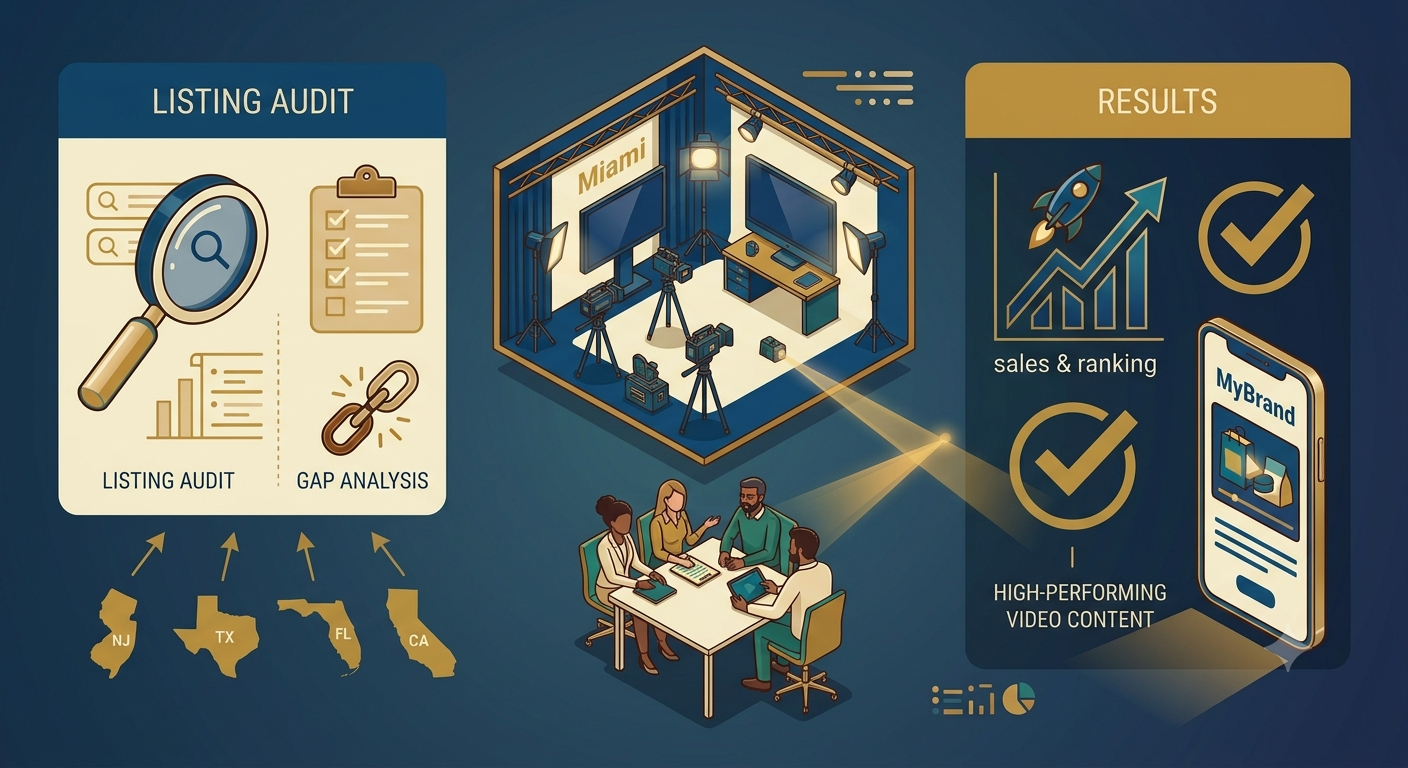
We'll review your current listing, your category's competitive bar, and walk you through the realistic ROI calculation for your specific situation.
Related articles:
